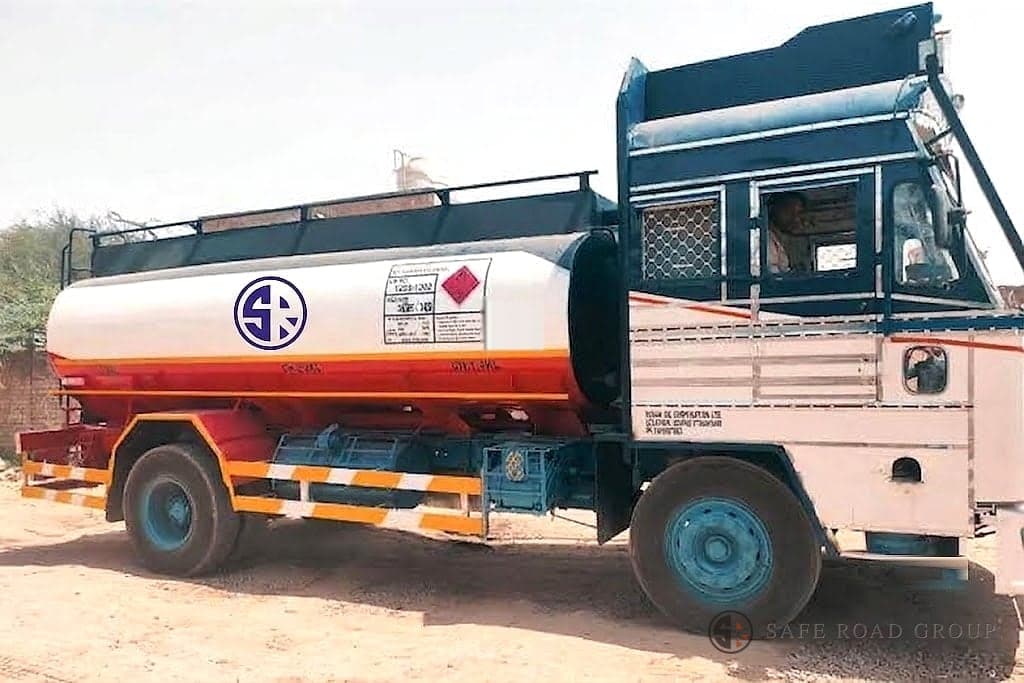
Rule 9 of the Central Motor Vehicles Rules requires that a driver carrying dangerous or hazardous goods holds, in addition to a licence for the class of vehicle, a certificate of training from a course approved for the purpose. This is that course, and the certificate it produces is what the licensing authority acts on when it places the hazardous goods endorsement on the licence.
Over three days a driver works through what the cargo actually is, how it behaves when something goes wrong, and what the law expects of the person behind the wheel. The classroom work is done in Hindi with English material, because the people who do this job read Hindi and because a safety instruction that is not understood is not a safety instruction. The practical drills are done on a placarded tanker on our own ground at Varanasi.
We teach it as a trade, not as a compliance formality. A driver who can recite the hazard classes but cannot say which extinguisher to reach for, or who will earth a vehicle because the gantry operator insists rather than because he knows what static does to petrol vapour, has not been trained. The assessment on the third day is written and practical for that reason.
On completion we issue the certificate. The driver then applies in writing to the licensing authority where he resides, with the certificate and his licence, and the authority makes the endorsement under Rule 9(3). Renewal follows the licence the endorsement sits on — and the refresher batches are where the most useful conversations happen, because by then everyone in the room has a story.
Fleets normally send drivers in batches. Where it is easier to keep the vehicles running, we bring the course to the depot instead, anywhere in India, on your dates.