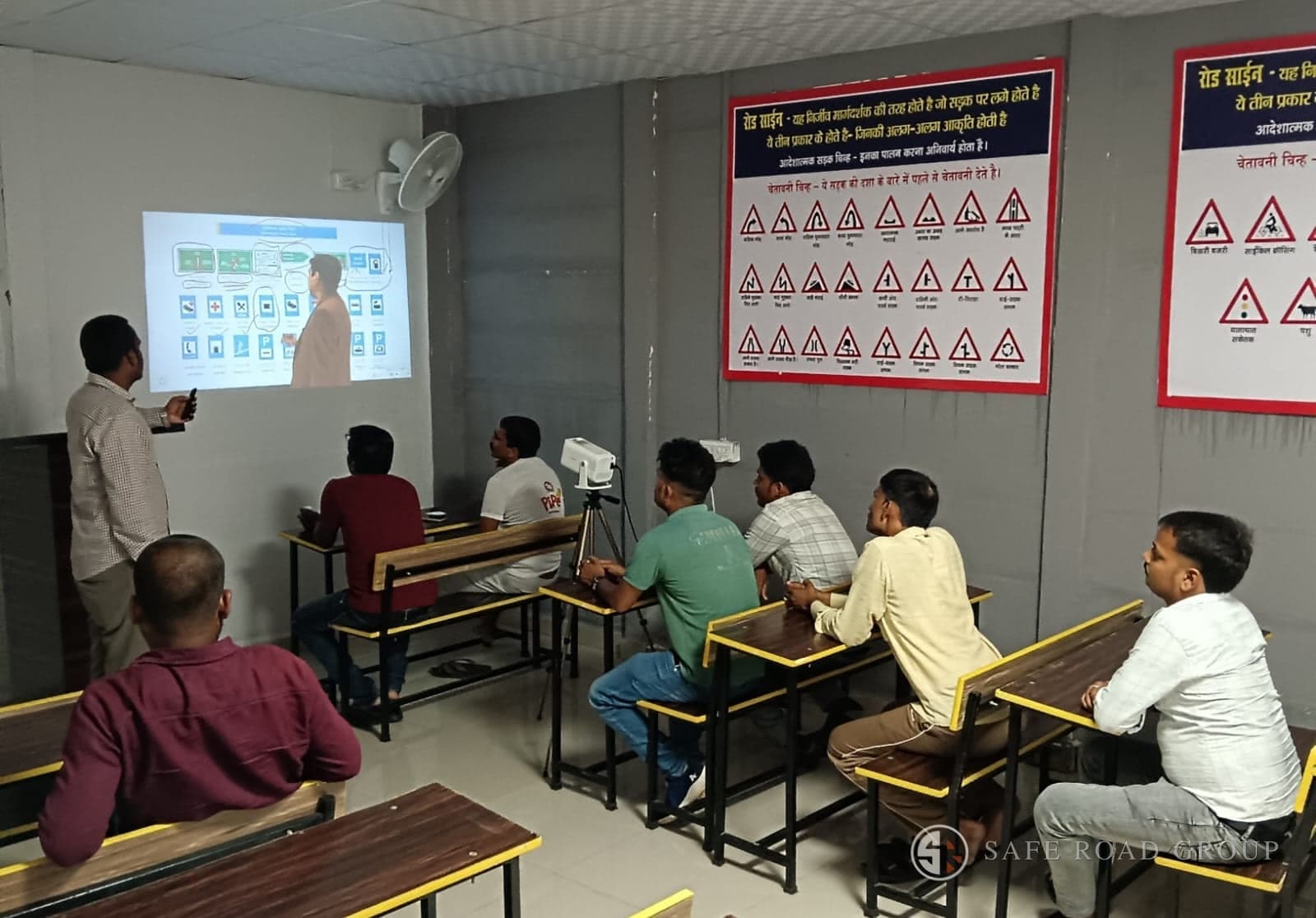
Non-transport vehicles
- Training period
- Not less than 21 days
- Behind the wheel
- Not less than 10 hours actual driving
- Lessons cover
- Parts A, B, C, F, G and K
- Prescribed by
- Rule 31(2) and 31(4)
The syllabus is not ours to set. Rule 31 of the Central Motor Vehicles Rules fixes the lessons, the minimum training period and the minimum hours behind the wheel; the Ministry’s scheme for driver training centres then sets out the course hour by hour, the standard the trainee is tested against, and what the centre has to hold before it may run any of it. Everything on this page is one or the other.
A centre may teach more than this. It may not teach less. The learner's licence must also have been held for at least thirty days before the test of competence — Rule 15.
Rule 31(1) sets out the syllabus in eleven lettered parts. Which parts a trainee covers depends on the class of licence applied for — a light vehicle course covers six of them, a transport vehicle course seven, and the two lists overlap only in part.
Syllabus — Rule 31(2) — Parts A, B, C, F, G and K
Syllabus — Rule 31(3) — Parts E, F, G, H, I, J and K
A serious fault fails the test whatever the total score says.
The theory paper is forty questions drawn at random by software from a bank of at least a thousand, weighted across every topic, and sixty per cent passes. The practical is marked on a fixed checksheet out of a hundred, and sixty passes that too — except that anyone who commits a serious or dangerous fault is disqualified regardless of the score. Eighty-five per cent attendance is what earns the right to sit either.
Two to three days, run periodically for drivers who are already working — State transport undertakings, private and public sector fleets, tanker and truck crews, and police and para-military drivers where they are sent.
It ends in a practical skill test and a theoretical behavioural analysis, so that the driver leaves knowing which of his own habits the course was about. The simulator is used deliberately here — it is the only way to put an experienced driver into rain, fog, night and a tyre burst in one afternoon without risking anybody.
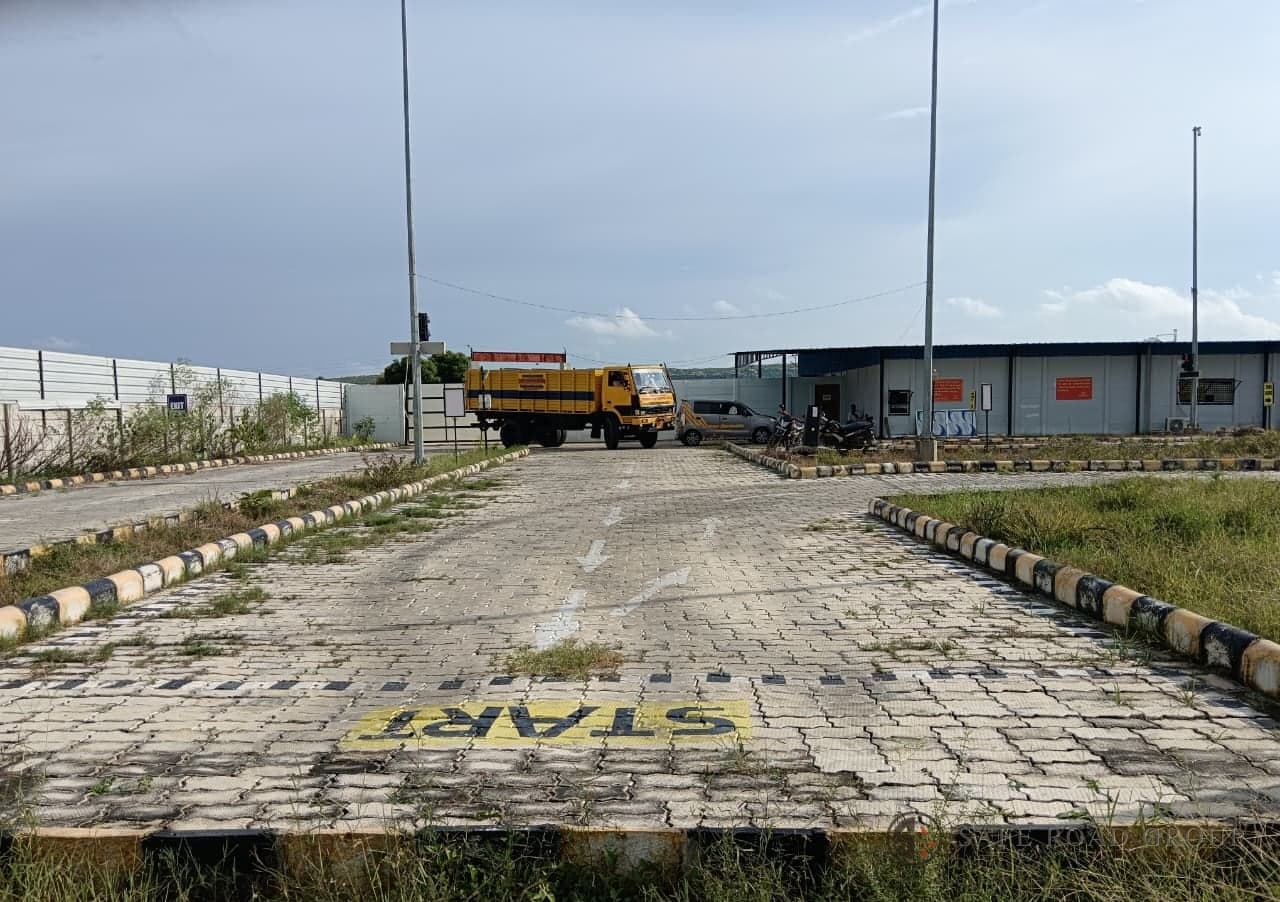
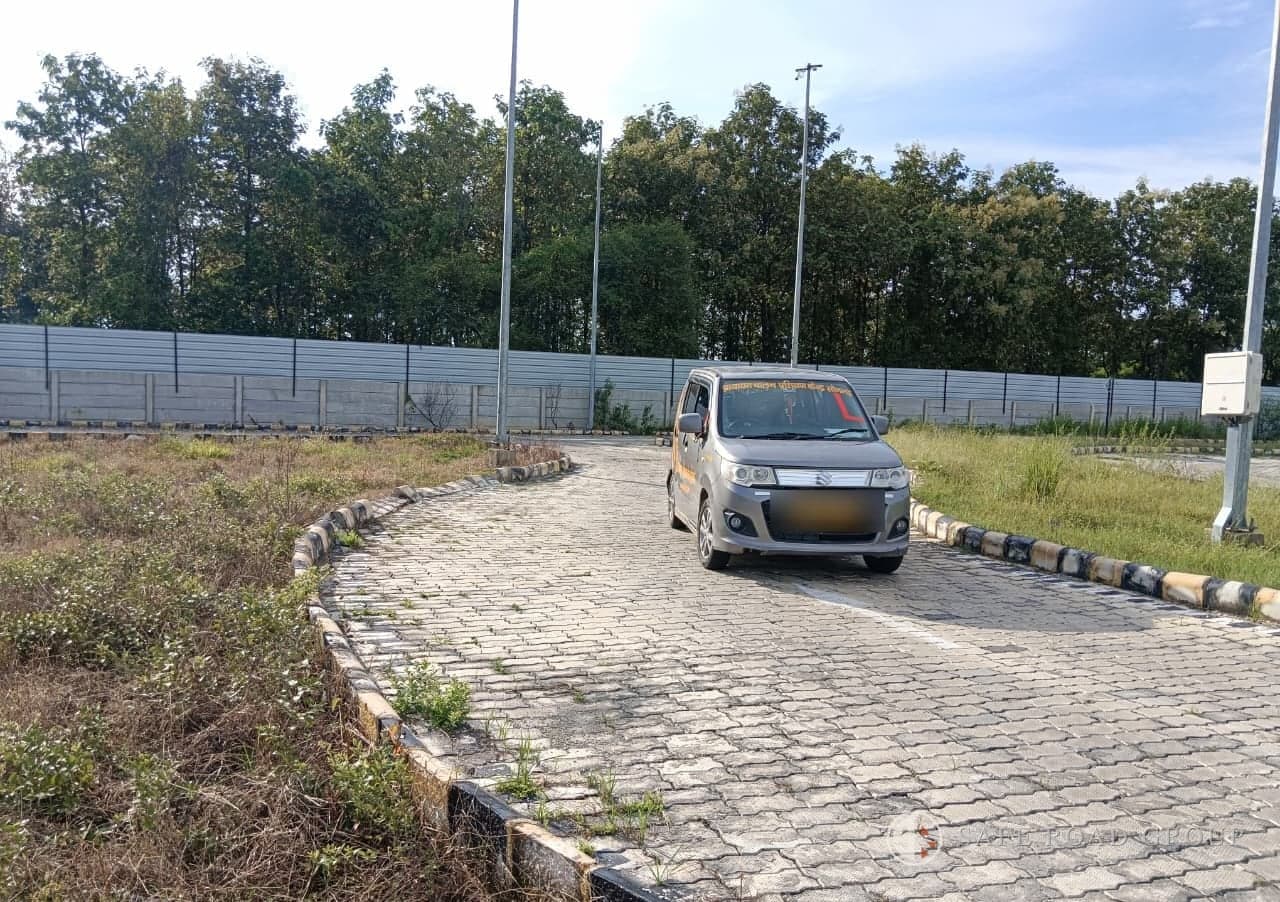
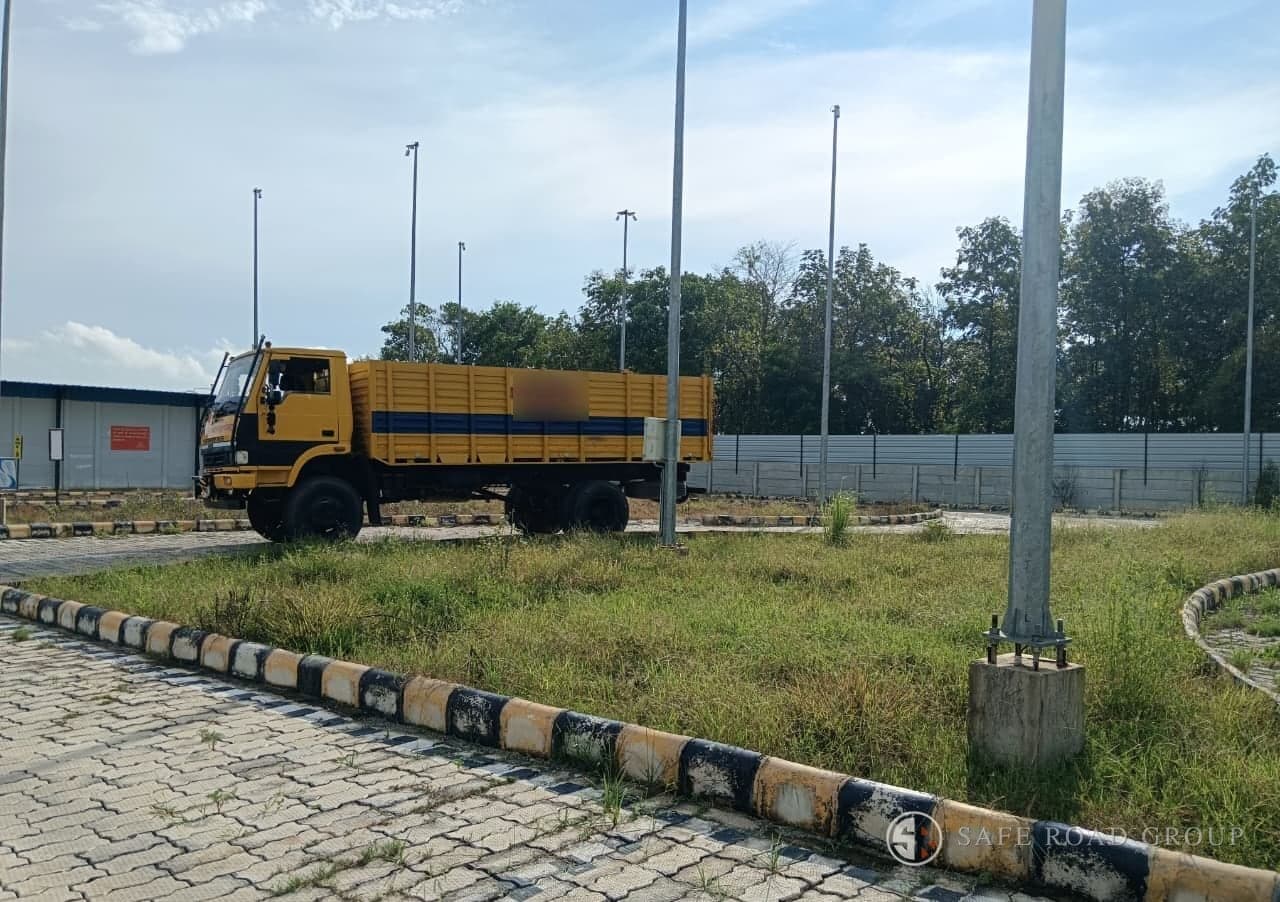
Every feature below is on the circuit at our operational centres, and the driving-skill test is taken on it. This is the part of a course worth asking any centre about.
With the range aids that make it behave like a road — traffic signs, automatic light signals, road markings, barriers, bollards and lighting — and cameras covering the whole circuit, so the run is scored as it happens rather than written down afterwards.
The State Transport Authority fixed what an accredited centre in Uttar Pradesh may charge for each course, by its notification of 2 February 2023. These are those figures, inclusive of GST. They are the same at every accredited centre in the State — if one quotes you more for these courses, it is overcharging.
| Course | Hours | Duration | Fee |
|---|---|---|---|
| Light Motor Vehicle | 8 theory + 21 practical | 29 hrs over 4 weeks | ₹6,000 |
| Medium / Heavy Motor Vehicle | 16 theory + 22 practical | 38 hrs over 6 weeks | ₹10,000 |
| Training the Trainers | 10 theory + 20 practical | 30 hrs over 6 days | ₹10,000 |
| Vehicle Mechanism & Maintenance / Fuel Efficiency | 4 theory + 8 practical | 12 hrs over 2 days | ₹1,000 |
| Refresher / Orientation | 4 theory + 6 practical | 10 hrs over 2 days | ₹1,000 |
| Night & Hill Driving / Wet Weather Driving / Emergency Manoeuvres | 2 theory + 2 practical | 4 hrs in one day | ₹1,000 |
| Traffic Education I & II / Public Relations / Road Rage & Stress Management | 3 theory + 3 practical | 6 hrs in one day | ₹500 |
| Fire Hazards Training on Vehicle | 2 theory + 2 practical | 4 hrs in one day | ₹500 |
| Road Accident / Pollution and Environment Training | 2 theory + 2 practical | 4 hrs in one day | ₹500 |
Source: Notification No. 155(1)/STA/2023 dated 2 February 2023, State Transport Authority, Transport Department, Government of Uttar Pradesh — fee schedule for Accredited Driver Training Centres. Amounts are inclusive of GST.
The licensing authority’s own charges — the learner’s licence, the test of competence and the issue of the driving licence — are separate, fixed by Rule 32 of the Central Motor Vehicles Rules, and paid to the RTO rather than to us.
The three-day dangerous goods course under Rule 9 is not in this schedule. It runs at our Varanasi centre under a separate licence and is quoted separately.
The notified fee above applies to these courses whoever books them. What is open to discussion is everything around them — batch scheduling across locations, on-site delivery at your depot, and the dangerous goods and industrial safety programmes, which this schedule does not cover at all.
Write to b2b@saferoadgroup.orgAnswered by the Manager (Training). A written proposal, not a price over the phone.
Tell us the class of licence, the head count and the district, and we will confirm the next batch date at the nearest centre.
WhatsApp us Call +91 91588 91589These courses run at the accredited centres — Sonbhadra and Bhadohi open, Jaunpur and Ghazipur being built. Varanasi, where the dangerous goods work sits, is one of the districts the Ministry lists as a high priority district for driver training, which is a fair description of the corridor all five sit on. See the five centres.